Acupuncture for Sciatica Relief: Ease Pain, Calm Inflammation, and Move Better in Cottonwood, Arizona.

Sciatica can make ordinary movement feel like a negotiation. Sitting hurts. Standing hurts. Walking may help for a minute, then the ache, burn, or zinging nerve pain returns down the hip, buttock, or leg.
The frustrating part is that sciatica often shows up during normal life. Long hours in a chair, long drives, weak glutes, tight hips, and poor posture can all irritate the low back and the sciatic nerve pathway. Sitting has even been called “the new smoking” because too much of it can affect circulation, posture, mobility, and overall health.
Acupuncture may help some people calm pain, reduce muscle guarding, and move more comfortably while the irritated nerve settles down. It is not a magic switch, and sciatica has different causes, but it can be a useful part of a broader plan that includes rest positions, gentle movement, heat when helpful, and smart daily habits.
This article is for general information only and is not a medical diagnosis or treatment plan. If pain is severe, worsening, or linked with weakness, numbness, bladder or bowel changes, fever, trauma, or unexplained weight loss, seek medical care promptly.

Why sciatica happens so often now
Sciatica is not a diagnosis as much as a description of symptoms. It usually refers to pain, tingling, numbness, burning, or electric sensations that travel along the sciatic nerve pathway. That path can run from the low back into the buttock, hip, back of the thigh, calf, or foot.
The sciatic nerve is the largest nerve in the body. It forms from nerves that exit the lower spine, then travels through the pelvis and down the leg. When something irritates or compresses one of those nerve roots, symptoms can show up anywhere along the line.
Common contributors include:
A bulging or herniated disc in the low back
Spinal arthritis or narrowing around the nerve
Tight hip and glute muscles that increase tension in the area
Inflammation around irritated tissues
Prolonged sitting, especially with slouched posture
Repeated bending, lifting, or twisting
A sudden strain after being inactive for a while
Sitting deserves special attention. When someone sits for long stretches, the hips stay flexed, the glutes switch off, and the low back often rounds. Over time, this can load the discs and soft tissues in a way that the spine does not love.
That does not mean every chair is bad or every case of sciatica comes from sitting. It means the body needs position changes. The spine likes variety. Nerves like space, blood flow, and gentle movement. When the day becomes one long seated position, irritation can build.
A simple rule helps: change position before pain forces you to. Stand, walk, stretch gently, or lie down in a supported position for a few minutes. Small resets throughout the day often work better than one big effort after pain has already flared.
How acupuncture may help sciatica pain
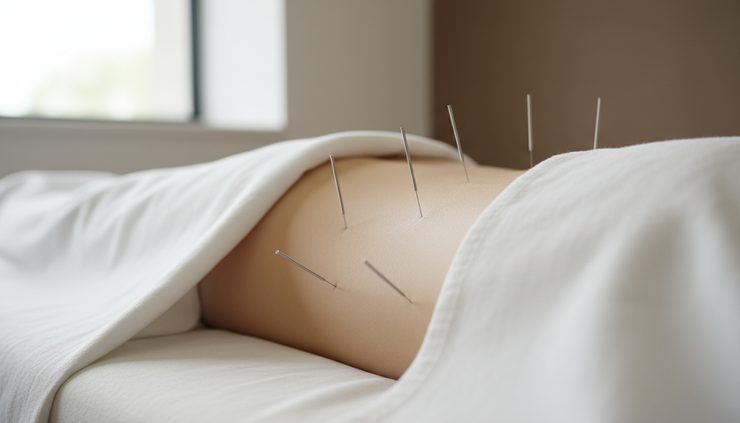
Acupuncture uses very thin needles placed at specific points on the body. In traditional East Asian medicine, treatment aims to improve the flow of energy and restore balance. In modern clinical terms, acupuncture may influence the nervous system, local circulation, muscle tone, and pain signaling.
For sciatica, the goal is usually to help the body calm the pain response and reduce protective muscle tightness around the low back, hips, and legs. When muscles grip around an irritated nerve, movement becomes stiffer. Stiff movement can then keep the cycle going.
Acupuncture may support relief in several ways:
It may help reduce pain sensitivity.
It may encourage tight muscles to release.
It may support blood flow in irritated areas.
It may calm the stress response that often rises with persistent pain.
It may make it easier to move gently, which is often part of recovery.
Some people feel relief after one visit. Others need several sessions before they notice a meaningful change. Response depends on the cause of the sciatica, how long it has been present, general health, activity level, and what happens between appointments.
A good acupuncture visit for sciatica often includes more than needle placement. The practitioner may ask about the exact pain path, what makes it better or worse, sleep position, work habits, exercise, and prior injuries. They may treat points in the low back, hips, legs, feet, hands, or other areas depending on the style of care.
Acupuncture for sciatica relief works best when it is paired with practical home care. The treatment can help calm the system, but daily positions and movement patterns matter too.
Rest positions that may calm the irritated nerve
During a sciatica flare, the goal is not to “push through” every sensation. A cranky nerve needs room to quiet down. Supported resting positions can reduce strain through the low back and pelvis, which may ease inflammation around the spine and let the nerve relax.
The best position is the one that clearly reduces symptoms. Pain should soften, spread less, or feel less sharp. If a position makes symptoms travel farther down the leg, stop and try another option.
Try side lying with pillow support
Lying on the side can feel good because it takes pressure off the low back and allows the hips to stack in a more neutral position.
Set it up this way:
Lie on the side that feels most comfortable.
Place a pillow between the knees.
Support the head with a pillow so the neck stays level.
Place another pillow under the top arm or hug a pillow to keep the shoulders relaxed.
Keep the knees slightly bent.
Let the belly, hips, and low back soften.
The pillow between the knees matters. Without it, the top leg may roll forward and twist the pelvis. That twist can tug on the low back. With support, the pelvis stays more even, which may reduce irritation.
This position is especially useful at night. Poor sleep increases pain sensitivity, and pain makes sleep harder. A supported side position can help break that loop.
Try lying on your back with knees supported
Back lying can also reduce strain when done with enough support.
Set it up this way:
Lie on your back on a firm but comfortable surface.
Support the head and neck with a pillow.
Bend the knees.
Place pillows, a bolster, or couch cushions under the knees.
Let the feet and legs relax.
Breathe slowly into the ribs and belly.
Bending the knees reduces the pull through the low back and hips. Some people like the “90-90” setup, with calves resting on a chair or couch so hips and knees are each bent. Others prefer one or two pillows under the knees.
Stay in the position for several minutes and notice what happens. A good sign is that the leg pain becomes less intense or moves closer to the low back. A warning sign is stronger tingling, numbness, or pain shooting farther down the leg.

Heat, gentle movement, and posture can make a difference
Rest helps during a flare, but total stillness for too long can make the body feel more guarded. Once sharp pain settles, gentle movement often becomes part of the path back.
The key word is gentle. Sciatica does not need aggressive stretching, deep twisting, or forceful exercise in the early stage. It needs safe movement that tells the nervous system, “We are okay.”
See if a heating pad helps
A heating pad may help when muscles around the low back, buttock, or hip feel tight and protective. Heat can increase comfort and make it easier to move.
Use it carefully:
Start with a low or medium setting.
Place a cloth layer between the heating pad and skin.
Use it for a short session, such as 15 to 20 minutes.
Do not sleep on a heating pad.
Avoid heat over areas with reduced sensation.
Heat is not perfect for everyone. If symptoms feel hot, swollen, or more inflamed after using it, stop. Some people do better with cold during an acute flare. The simplest guide is your body’s response. If heat helps you move with less pain, it may be useful. If it makes pain sharper, skip it.
Move in water if walking hurts
Pool movement can be a great option because water reduces load on the spine and legs. You do not need a hard workout. Walking slowly in chest-deep water, gentle marching, or easy side steps may be enough.
The pool can help because it allows movement without the same pressure as land walking. Warm water may also relax tight muscles. Keep the pace easy. If symptoms increase, shorten the session or stop.
Use the shopping cart trick
One practical trick for walking with sciatica is using a shopping cart. Many people naturally walk better when they hold the cart lightly, stand tall, and take smoother steps. The cart gives a bit of support and confidence without forcing a hunched posture.
Try this at a grocery store or large retail store:
Hold the cart lightly instead of leaning heavily on it.
Keep the chest lifted.
Let the shoulders relax.
Take smaller steps.
Walk slowly enough to keep good posture.
Stop before pain builds too much.
This can be a useful bridge between resting and regular walking. It gives the body a chance to practice movement with support.
Still, pay attention to posture. If the cart makes you fold forward and hang on your arms, it may not help. The goal is upright, easy movement, not collapsing into the handle.

What to expect from an acupuncture care plan
A sciatica care plan should start with a clear conversation. The practitioner will want to know where the pain begins, where it travels, how intense it feels, and what activities trigger it. They may ask whether coughing, sneezing, sitting, bending, or walking changes symptoms.
The first treatment may be gentle. Needles often stay in place while the person rests quietly. Some people feel heaviness, warmth, tingling, or a dull ache around the points. Many feel relaxed. Treatment should not feel unbearable or alarming.
After a session, soreness can happen, but it is usually mild. Some people feel sleepy or loose. Others notice that pain changes location or intensity over the next day. That change can provide useful information.
A reasonable plan may include a short series of visits, then reassessment. If symptoms improve, visits may spread out. If nothing changes, or if symptoms worsen, it may be time to coordinate with a physician, physical therapist, or other healthcare provider.
Seek medical evaluation right away if sciatica comes with:
New or worsening leg weakness
Numbness in the groin or saddle area
Loss of bladder or bowel control
Severe pain after a fall or accident
Fever or signs of infection
Unexplained weight loss
Pain that does not ease in any position
Acupuncture can be part of care, but serious nerve symptoms need prompt medical attention.
Daily habits that support recovery
What happens between treatments matters. Sciatica often improves when the day includes more posture changes, less prolonged sitting, better rest positions, and gentle movement.
A simple daily rhythm may look like this:
Sit for shorter blocks.
Stand and move before symptoms spike.
Use side lying or back lying support when pain increases.
Try heat if it clearly helps.
Walk gently, in water or with light cart support if needed.
Avoid heavy lifting and deep bending during a flare.
Build back slowly as symptoms calm.
The hardest part is often patience. Nerves can be slow to settle. Pushing too hard one day can create a setback the next. A better plan is to repeat small wins.
If sitting causes symptoms, change the setup. Use a chair that supports the low back. Keep both feet on the floor. Avoid crossing one leg for long periods. Stand during phone calls when possible. Take short walking breaks. Your spine does not need perfect posture all day. It needs regular movement and fewer hours stuck in one shape.
If sleep is the problem, prioritize pillow support. Side lying with a pillow between the knees, under the head, and under the arm can be surprisingly effective. Back lying with the head supported and knees bent over pillows can also reduce tension. These positions may help ease inflammation around the spine by reducing mechanical stress, giving the nerve a better chance to relax.

The takeaway
Sciatica relief usually comes from a combination of approaches. Acupuncture may help calm pain signals, relax guarded muscles, and make movement feel safer. Supported rest positions can reduce strain through the spine and pelvis. Heat may help if tight muscles are part of the problem. Gentle movement, especially in a pool or with the light support of a shopping cart, can help the body regain confidence.
Start with what reduces symptoms. Keep changes small and consistent. If pain travels less, feels calmer, or allows easier movement, you are likely moving in the right direction.
The goal is not just to get through the flare. The goal is to help the nerve settle, help the spine move better, and build a daily routine that makes sciatica less likely to take over again.


Comments